DOES EVERYONE IN THE ROOM KNOW WHAT SUCCESS LOOKS LIKE?
It’s the question we ask first when a firm brings us in to lead a growth initiative, a rebrand, a new market entry, or a post-merger alignment. And it’s the question that, honestly, most executive teams can’t answer cleanly.
Initiatives in AEC tend to get set up the same way every time — a few principals, a few marketers, a whiteboard, a deadline — and everyone rolls up their sleeves before anyone has defined what they’re building together. That’s where the work stalls — not at execution, but at clarity.

Initiatives Don't Fail at the Finish Line - They Fail at the Setup
Here’s what we see across the AEC firms we work with: a market entry or client experience initiative kicks off with energy, leadership is aligned (or says they are), and a plan gets built. Then six months in, the BD team is chasing one set of targets, the principals are describing the firm’s direction differently in client meetings, and the project leads haven’t heard about any of it.
They’re all working off different pictures of the same idea, and nobody realizes it until the gaps start showing.
The fix isn’t more meetings — it’s a better starting line, one where the CEO, the executive team, the CMO, and the people who will carry this work understand the direction the same way and can describe success in the same language.
We built the Clarity Framework to create that shared starting line. Six steps, one page, designed to answer the questions that should always come before a kickoff: what are we building, what does winning look like, and who owns it forward?
IF IT WAS NAMED A YEAR AGO, LEVEL SET BEFORE YOU LAUNCH
Here’s a scenario we run into constantly: you’re not kicking off a brand-new idea, but executing on something your executive team named twelve or eighteen months ago during strategic planning — launch a new sector, expand into a new geography, reposition the firm. And now it’s time.
Even when it feels like the decision has already been made, don’t skip the setup.
A year is a long time in AEC right now, and the landscape can shift significantly in that window — markets move, federal funding changes direction, key clients change hands, and your team roster likely looks different than it did at that off-site. The principal who championed the idea may have very different priorities today than they did then.
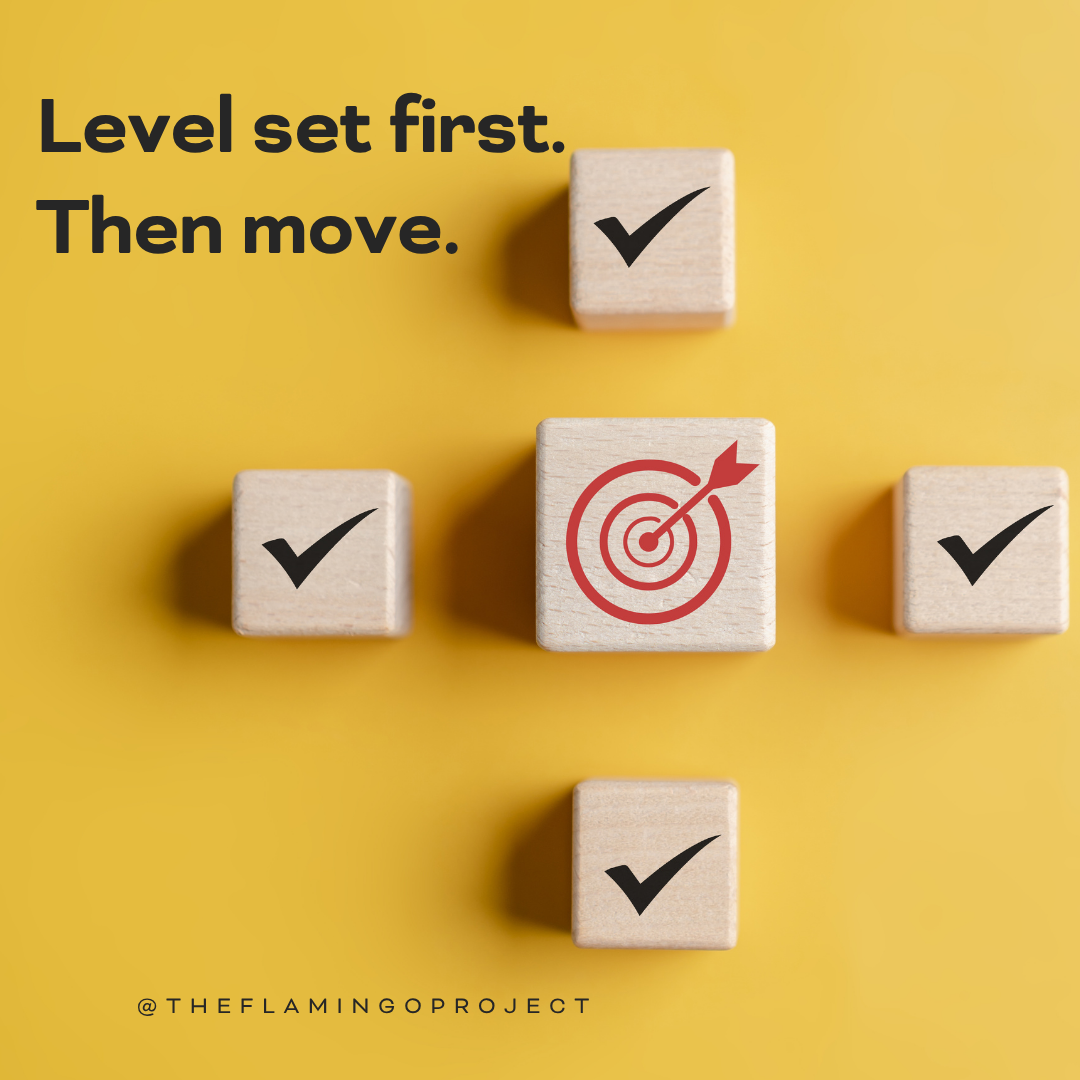
Before you launch, level set. Does the original why still hold? Is the definition of success still the right one — or has the market changed what winning looks like? Who needs to be brought back into the conversation that wasn’t there the first time? Where has the context moved underneath this initiative, and what does that mean for how it gets executed now?
Clarity isn’t just for new ideas. It matters even more when you’re picking up work that was named under different conditions.
WHO YOU BRING IN — AND WHEN — CHANGES EVERYTHING
Most firms wait too long to widen the conversation. The direction starts at the top (as it should), then gets handed down in pieces, and by the time it reaches the people doing the work, it’s been filtered three times, and the nuance is gone.
A few guardrails we recommend as you’re setting your initiative up:
Bring your CMO in at the strategy table, not the communication stage. If your CMO is hearing about the growth plan after it’s baked, you’re leaving the translation layer on the floor. Your marketing leader should be shaping the strategy, not just announcing it. They know how each audience will hear it, where the language will land, and where it will get lost.
Include at least one operator who will have to deliver it. A studio director, a market sector leader, a principal who owns a key client relationship. Executive teams build strategy in abstraction. Operators will tell you in 30 seconds if the plan breaks in the field. Bring them in early and you save six months.
Be intentional about who is in the room for the “why.” The business case gets made once — in the founding conversation — and everyone who hears it shapes the story from that moment on. Who gets to hear the “why” firsthand is a strategic choice, not a calendar one.
Name a single owner for clarity. Not the initiative — the clarity of the initiative. This is usually the CMO or Head of Strategy, and it’s their job to make sure the message stays consistent from executive off-site to team meeting to proposal response. Without that role, the message drifts.

SET THE INITIATIVE UP TO TRAVEL
Once the right people are in the room, the question shifts from what are we doing to how will this land three layers down from us?
We coach our clients to define success in three ways before they launch:
- What success looks like for the initiative
- What it looks like for the firm, and
- What it looks like for the people who have to execute it.
These are not the same thing, and assuming they are is where most AEC growth work quietly falls apart.
The CEO might define success as market share, the CMO as brand presence, and the studio leader as billable stability — and all three can be right, but if you don’t name them out loud, they’ll pull your initiative in three different directions.
Clarity at the start isn’t slow — it’s the difference between six months of forward motion and six months of course-correcting because half your firm never understood the plan.
THE BOTTOM LINE FOR EXECUTIVE TEAMS
“If I stopped five people from different levels of my firm and asked them to describe what we’re working toward, would they give me the same answer?”
If the answer is no, that’s your first project. And it’s worth doing before anything else.
Your strategy is only as strong as the clarity behind it. If people don’t understand it, they won’t align to it. And if they don’t know what success looks like, they won’t achieve it.
And that’s where we start — every single time.
Need help building that starting line? The Flamingo Project works with AEC executive teams to turn strategy into shared understanding — so the work travels.