
January has a funny way of sobering us up.
In the fall, you planned. You workshopped. You debated priorities. You built the business plan, nodded confidently, and kicked things off on January 1 with fresh notebooks and big energy. And now it is late January. The coffee is still hot, but reality has arrived.
Some initiatives are humming. Others are already…not. Pipelines look different than forecasted. Markets are shifting in ways that the spreadsheet did not anticipate. Teams are asking good, but uncomfortable questions.
If this is sounding familiar, congratulations. You are not failing. You are simply at the Groundhog Day moment of your plans.
Because this is the part where you decide whether you keep repeating the same motions, hoping for a different outcome, or you pause, learn, and make a smarter move.
The Groundhog Day Trap: When Plans Repeat Themselves
In the movie Groundhog Day, Phil wakes up to the same day over and over until he finally changes how he shows up.
We see the same pattern with annual business plans in A/E/C firms. The plan looks solid on paper. The kickoff feels energizing. Then, a few weeks in, the same issues resurface:
- Business development activity is busy but not focused
- Growth goals feel ambitious, but the path to them is fuzzy
- Teams are executing tactics without a shared understanding of why
- Leadership senses something is off, but cannot yet name it
Left unaddressed, firms default to last year’s behaviors when it comes to this year’s branding. That is not strategy. That is déjà vu.

We see this often when firms sense market shifts but do not pause long enough to understand what is actually changing; reacting without clarity can quietly pull teams off course even when activity stays high.
This is often the point where plans start to slip—not because they were poorly built, but because the strategy has not fully taken hold within the organization.
“A good plan is not rigid. It is responsive.”
This is a Moment to Pivot, Not Panic
Late January and early February are one of the best times to revisit your plan. You now have real signals instead of assumptions.
Ask yourself:
- What is already working better than expected?
- Where are we seeing resistance, confusion, or stalled momentum?
- Which markets, sectors, or clients are showing early shifts?
- Are our business development priorities still the right ones?
This is not about tearing the plan apart. It is about tightening it.
We often say that a good plan is not rigid. It is responsive. Strategy works best when it is treated as a living practice, not a one-time deliverable.
Our Head Bird, Sarah, says that strategy is not a one-time event. It is an ongoing practice of paying attention and adjusting with intention.
Three Smart Adjustments to Consider Right Now
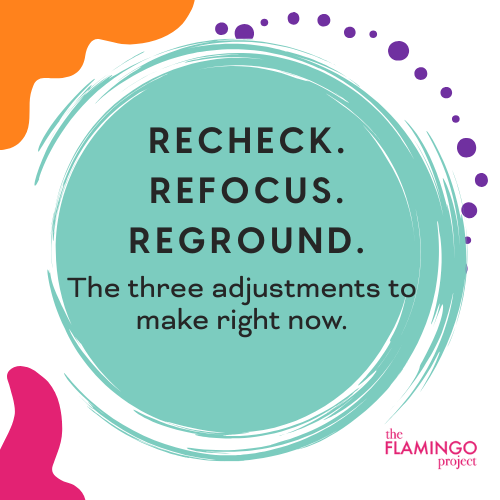
At this stage of the year, the goal is not a wholesale rewrite of your plan. It is a recalibration. The most effective firms pause early, take a clear-eyed look at what they are seeing, and make targeted adjustments before habits harden and momentum drifts. These three moves tend to create the most clarity, the fastest.
1. Recheck your assumptions: If you are questioning whether your assumptions still hold true, you are asking the right question. There are several market research resources available that firms can reference for focused research to validate direction without overwhelming teams. Most plans are built on fall-time data and best guesses. Markets change quickly. This is where a light-touch research pulse or market check can be invaluable. Even a small update to your assumptions can prevent months of misaligned effort.
If you built your plan without updated market intelligence, this is the moment to layer it in.
2. Refocus Business Development Efforts: Market research and growth strategy are deeply connected. We often see business development strategy efforts lose focus when teams lack shared clarity on where to play and why. Early-year BD activity tells a story. Are pursuits aligned with strategy, or are teams chasing everything that moves? A quick relaunch or refinement of your business development plan can:
- Clarify priority markets and clients
- Reset expectations for sellers and leaders
- Align marketing, BD, and leadership around shared goals
This is also a great time to pull out the tools. Our A/E/C planning and growth tools blog outlines practical frameworks teams use to refocus without overcomplicating things.
3. Reground the Plan with People: If your team feels disconnected from the plan already, that is a signal worth listening to. The most effective pivots we see are not purely analytical. They are human.
- What clarity does your team need right now?
- What decisions are they waiting on?
- Where can leadership simplify the message?
This is where Sarah’s leadership approach resonates so deeply. Empathy and strategy are not opposites, they are partners.
When Support Makes Sense
Sometimes the smartest move is acknowledging that an outside perspective would help. One that is:
- A focused strategy working session
- A targeted market research update
- A business development plan reset
- Or simply a sounding board for leadership
Getting support early in the year creates momentum instead of a midyear scramble.
Growth planning conversations often return to the same truth: clarity compounds. Sarah explores this idea in her conversation on The Marketing Cheat Code, where she shares why information is not just data—it is your compass.
Do Not Wait for the Next Loop
Groundhog Day only ends when Phil changes his approach. Your 2026 plan does not need more time to “settle.” It needs a thoughtful check-in and a willingness to adjust. This moment—right now—is where strong leadership shows up.
If you want to talk through what you are seeing, what feels off, or what might need a pivot, we are here, and not with judgment. With insight, tools, and a genuine desire to help you move forward.
Because growth does not come from repeating the same day. It comes from learning and choosing differently.
Growth Doesn’t Come From Repeating the Same Day.
It Comes From Choosing Differently.
Ready to Recheck Your Plan?
A short conversation now can save months of misaligned effort later. Put some time on Sarah’s calendar.